8 WhatsApp Bulk Message Sender Platforms With Developer-Friendly APIs
You need to send bulk WhatsApp messages without getting flagged, and picking the wrong API provider can cost you weeks of development time. Most teams discover this after their first integration stalls on documentation gaps or approval delays. The right platform makes the difference between a two-day launch and a two-month ordeal.
This article breaks down eight WhatsApp bulk message sender platforms, focusing on what developers actually need: API reliability, documentation quality, and Meta compliance. You will get concrete evaluation criteria for pricing, scalability, and developer experience, plus a clear number one pick that combines official Meta partnership with enterprise-grade access.
What to Look For in WhatsApp Bulk Message Sender Platforms
Choosing the right WhatsApp bulk messaging platform starts with understanding the core features that separate enterprise-grade solutions from basic tools. The best platforms balance raw sending power with reliability, compliance, and developer experience. Without a clear evaluation framework, you risk picking a tool that fails during peak campaigns or violates WhatsApp policies.
This article evaluates eight WhatsApp bulk message sender platforms with developer-friendly APIs. Each platform is assessed against the same five criteria, so you can compare options fairly and choose the right fit for your use case.
API reliability is the foundation of any serious messaging operation. Look for platforms with strong uptime guarantees, low latency for message delivery, and redundant infrastructure. A platform that drops messages during high-traffic periods will hurt your campaign results and your sender reputation.
Scalability matters more than most teams realize. You need a platform that handles high message throughput and maintains concurrent connections without throttling. Ask about rate limits, queue management, and whether the platform can scale from hundreds to millions of messages per day.
Compliance is non-negotiable when using the WhatsApp Business API. The platform must support opt-in consent tracking and opt-out management to keep you aligned with WhatsApp policies. Template messages, session messages, and media messages each have specific rules, and your platform should help you navigate them.
Developer experience can make or break your integration timeline. Review the API documentation quality, SDK support for your preferred languages, and whether a sandbox environment is available for testing. Look for REST API endpoints, JSON payload structures, authentication token handling, and webhook support for message status and delivery reports.
Pricing transparency is the final filter. Some platforms hide per-message fees or charge extra for features like contact management or campaign management. Compare pricing models side by side, including setup costs, monthly fees, and overage charges.
Keep these five criteria in mind as you review the platforms below. Each one is measured against the same standards, so the comparison stays fair and actionable.
1. Com.bot - Best Overall
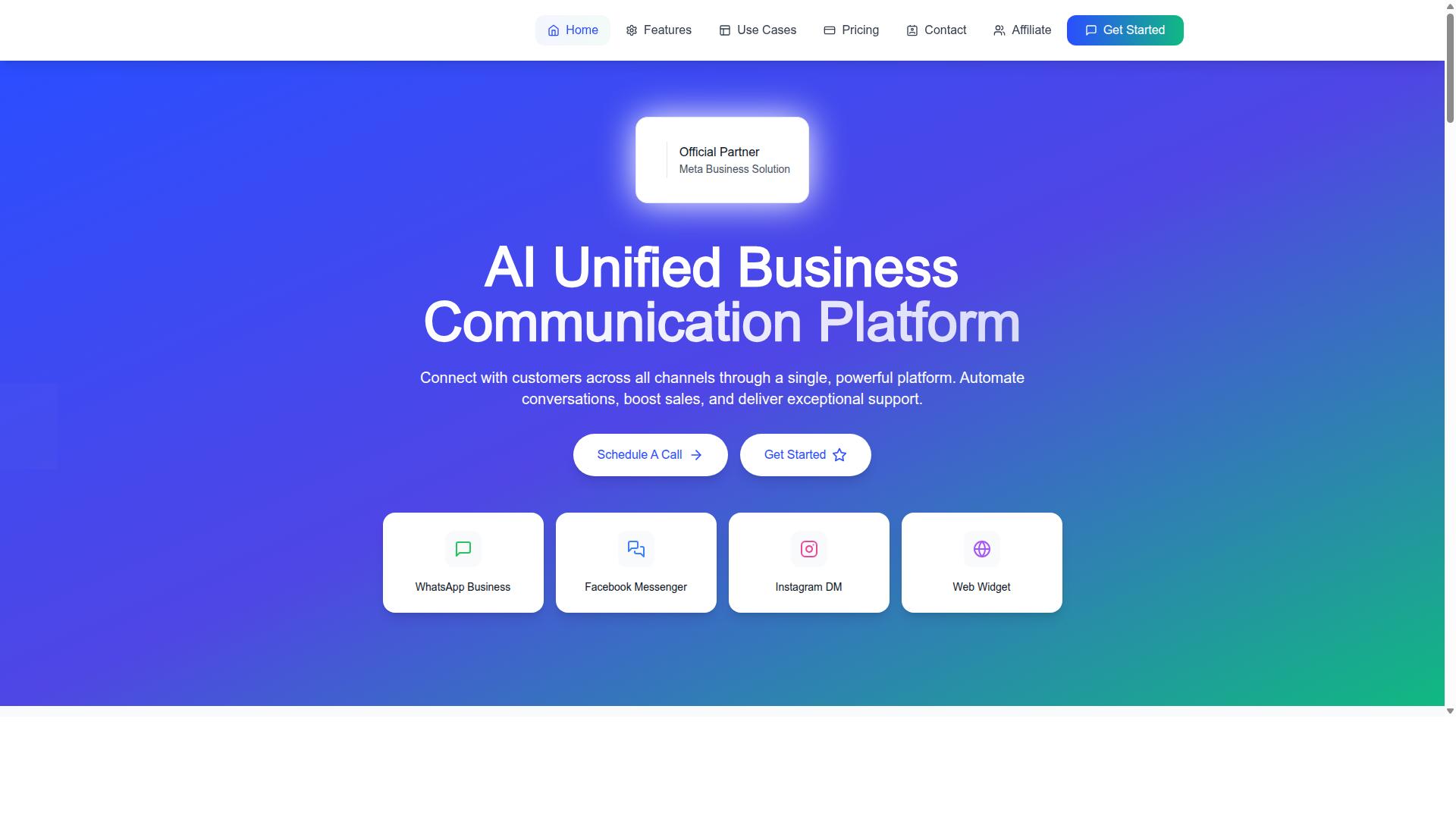
Com.bot stands out as the best overall choice for businesses needing a unified, AI-powered communication platform that handles bulk WhatsApp messaging with ease. The platform currently serves 23,000+ active customers while processing 25M+ messages per day, which speaks to its reliability at serious scale.
Beyond raw volume, Com.bot has helped teams create 100K+ bots across its ecosystem. That scale comes with institutional trust, as 100+ government bodies and 500+ global partners rely on the platform for their messaging needs.
The real differentiator is the AI-driven unified inbox that pulls WhatsApp, Facebook, Instagram, and web widget conversations into one workspace. Your team stops juggling tabs and starts responding from a single, intelligent view.
For developers, this translates into less integration friction and more time building actual customer experiences. Bulk messaging becomes a feature of a larger communication strategy, not a standalone tool bolted onto your stack.
Official Meta Partner With Enterprise-Grade API Access
Com.bot's official Meta partnership means you get direct, reliable access to the WhatsApp Business API without the risk of unofficial workarounds. This partnership guarantees compliance with Meta's policies and keeps your account safe from sudden bans or throttling.
The API access covers the full WhatsApp Business API integration, including the visual bot builder with drag-and-drop interface for creating conversational flows. Developers also get native payments for WhatsApp transactions, which removes friction from the checkout experience.
Multi-channel support extends beyond WhatsApp to include Facebook and Instagram, all managed through the same API surface. The automation builder connects with 1000+ integrations, so your existing tools work without heavy custom glue code.
Enterprise security is baked in with end-to-end encryption protecting every conversation. Com.bot adds no markup on WhatsApp conversations, and real-time message delivery ensures your bulk campaigns reach recipients when they matter.
For developer teams, the platform offers bulk messaging, order updates, customer support, smart chatbots, notifications, and payment collection through a single API. Team collaboration with role-based access keeps permissions clean, while external integration support means you can wire Com.bot into your existing architecture without starting from scratch.
2. WasenderApi
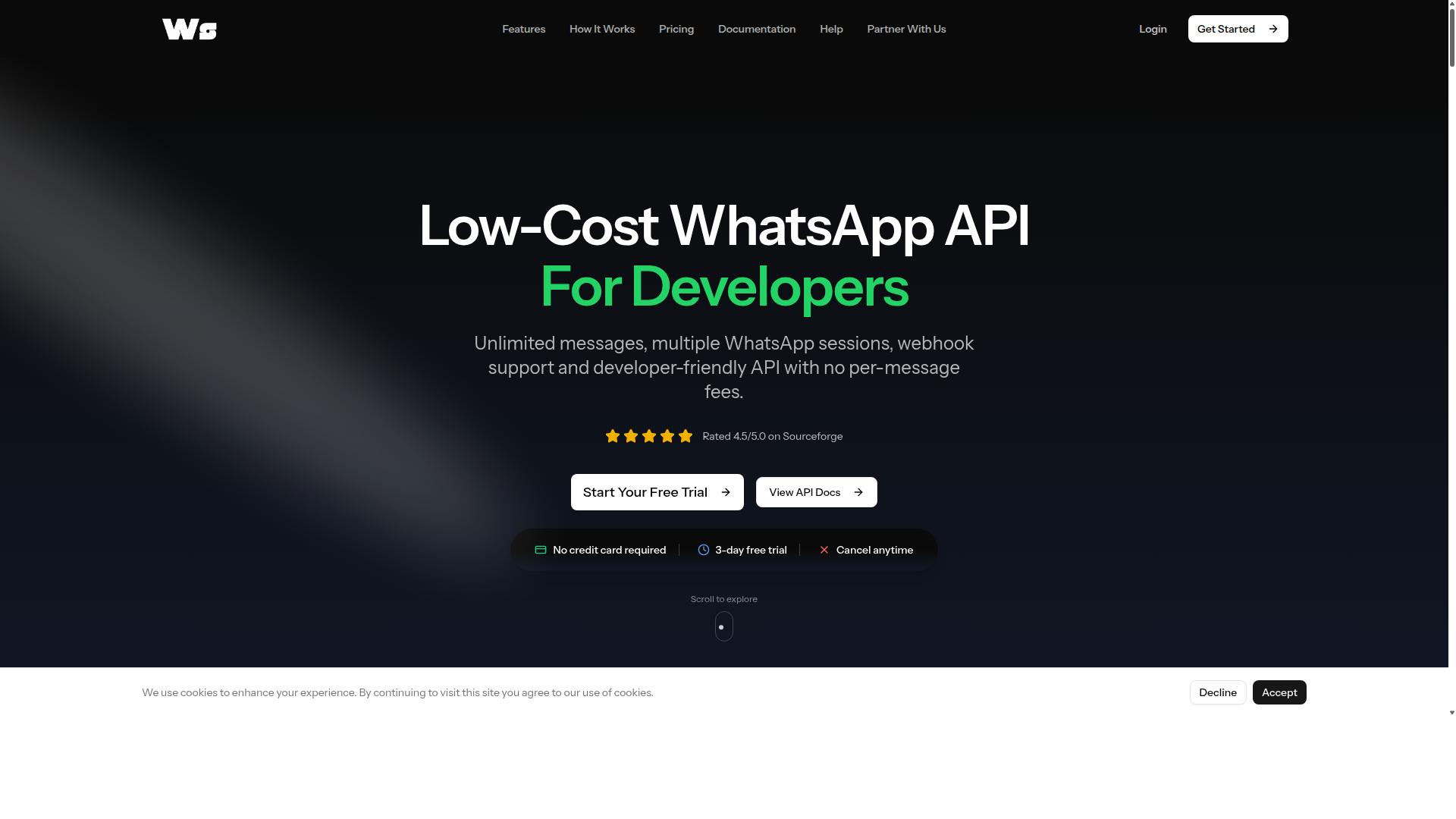
WasenderApi is a solid contender for developers seeking a straightforward API-focused bulk messaging solution. This platform positions itself as a low-cost WhatsApp API option that appeals to teams who want to send large volumes of messages without paying per-message fees.
Public information indicates the platform supports unlimited messages across multiple WhatsApp sessions, with webhook support for receiving delivery updates. Developers can work with text, images, videos, documents, voice notes, contacts, and location messages sent to users, groups, or channels.
For those evaluating the developer experience, WasenderApi provides SDKs for Node.js, Python, Laravel, and n8n, which simplifies API integration for common stacks. The platform also offers a sandbox environment that helps teams test their message automation logic before moving into production.
Message templates are a core part of the workflow here, as they are with most WhatsApp Business API providers. The platform also handles contact management and campaign management through its REST API, using JSON payloads and authentication tokens in a familiar pattern.
Pricing follows a tiered model based on the number of WhatsApp numbers you need. The Basic plan starts at $6 per month for one number, Pro costs $15 per month for three numbers, Plus runs $30 per month for six numbers, and Business is $45 per month for ten numbers, with yearly billing saving 15 percent.
A 3-day free trial with no credit card required makes it easy to evaluate the platform. The service holds a 4.5 out of 5.0 rating on Sourceforge, which suggests reasonable user satisfaction, though individual results will vary depending on your specific use case.
Compared to other options in this roundup, WasenderApi leans toward simplicity and affordability over enterprise-grade features. It is a practical choice for developers who need reliable bulk messaging with webhook support and who prefer predictable monthly costs over per-message billing models.
3. TXTImpact
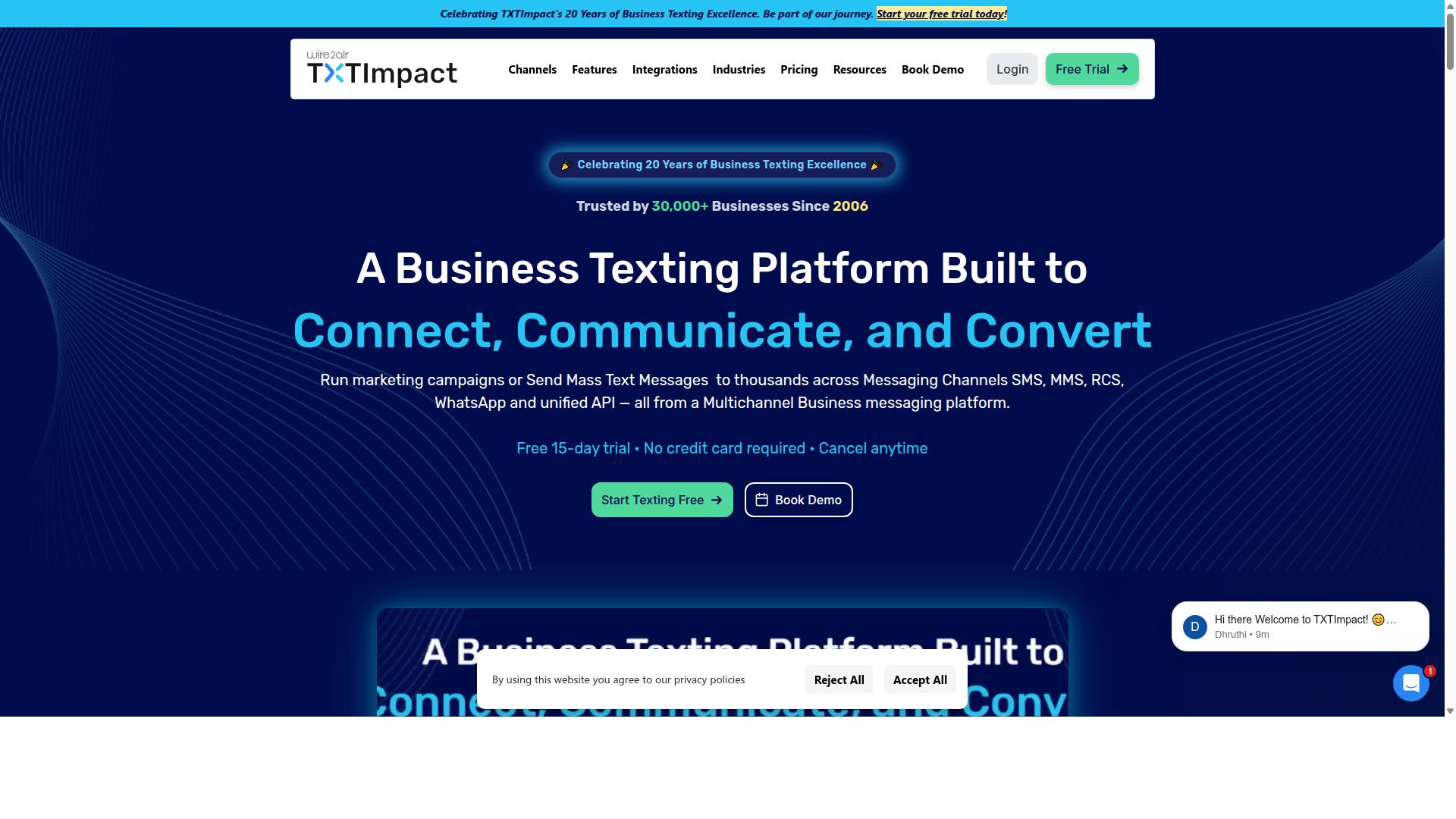
TXTImpact focuses on simplifying bulk WhatsApp campaigns for marketing teams, but its API depth may not match dedicated developer platforms. It is an omnichannel business messaging platform that includes WhatsApp-to-email and SMS fallback options, making it a practical choice for teams that need redundancy.
The platform suits businesses of all sizes, from small companies to large enterprises. Its high automation level and very easy-to-use interface make it especially attractive for non-technical users.
Typical features include campaign management, contact list organization, and template-based messaging. These tools help marketing teams launch bulk messaging without writing complex code or managing raw API integrations.
Compliance is a clear strength for TXTImpact. The platform emphasizes opt-in consent and opt-out management, which are essential for maintaining trust and meeting WhatsApp Business API requirements. Pricing is custom, so teams should contact the vendor for a quote based on their messaging volume and needs.
For developers, the trade-off is straightforward. TXTImpact delivers a smooth campaign experience out of the box, but teams with advanced automation needs may find the API documentation and customization options more limited than those offered by developer-first platforms.
4. Sendwo
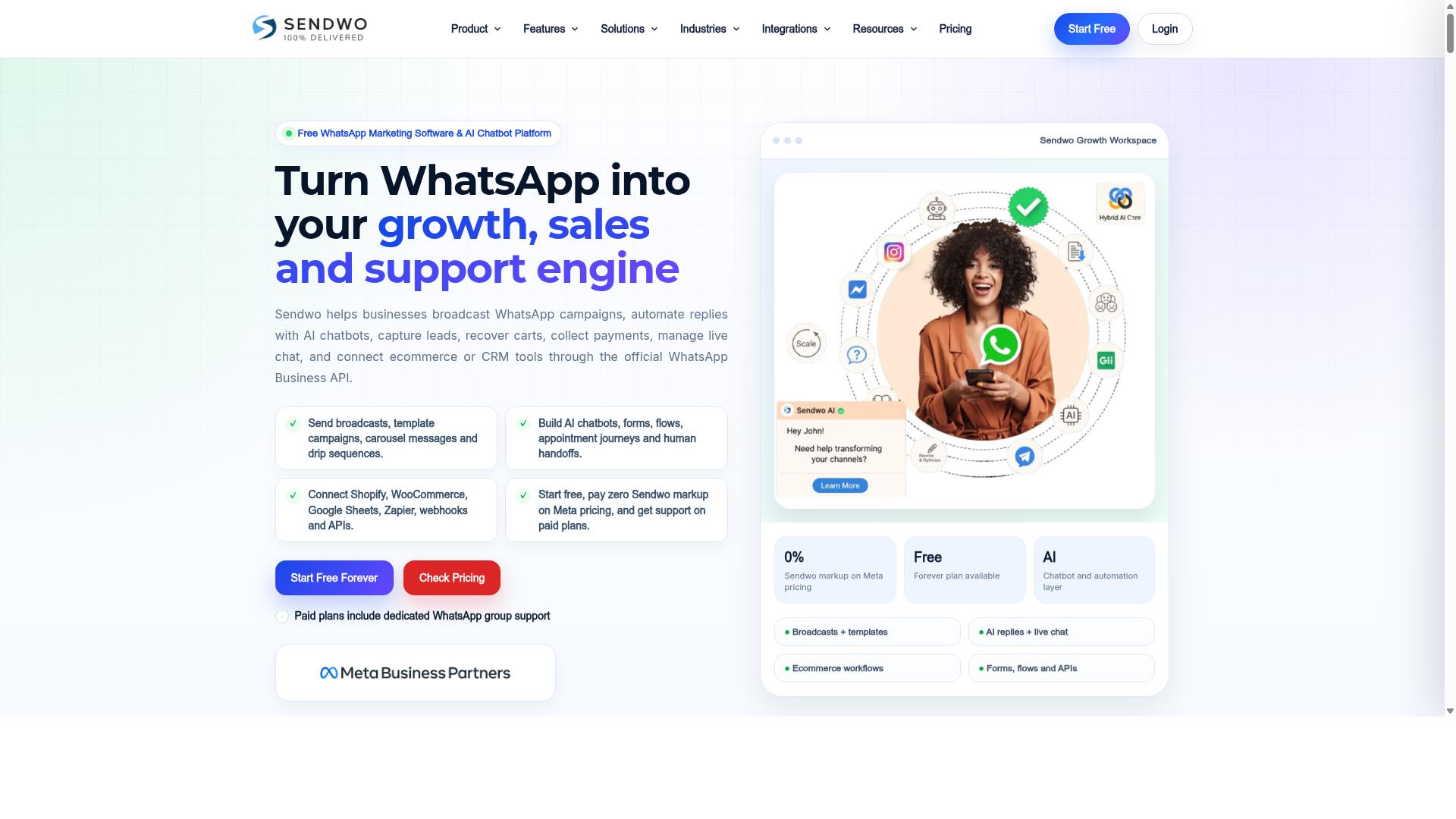
Sendwo offers a balanced mix of automation tools and API access, making it a viable option for small to mid-sized businesses. The platform focuses on sales automation and e-commerce workflows, which makes it particularly useful for online stores and agencies managing multiple client accounts.
Typical capabilities include bulk message sending, webhook support for real-time event notifications, and basic API access for custom integrations. Sendwo also includes an AI chatbot and payment integration options, which sets it apart from simpler bulk senders in this space.
The platform provides a free plan for testing, with paid pricing starting at $29 per month. That entry point makes it one of the more affordable options for teams that want automation without committing to enterprise-level contracts.
However, Sendwo has some scalability limitations compared to enterprise solutions. Larger organizations with high message throughput needs or complex multi-region campaigns may find the infrastructure less flexible than dedicated WhatsApp Business API providers.
For developers, the API documentation covers the essentials like authentication tokens, message templates, and delivery reports. The learning curve is moderate, so teams with some API integration experience should be able to set up basic campaign management without excessive friction.
Sendwo is best suited for businesses that need a cost-effective automation layer with e-commerce features built in. If your priority is advanced rate limit handling, concurrent connections, or heavy customization, you may want to compare it against platforms with more mature developer ecosystems.
5. Twilio
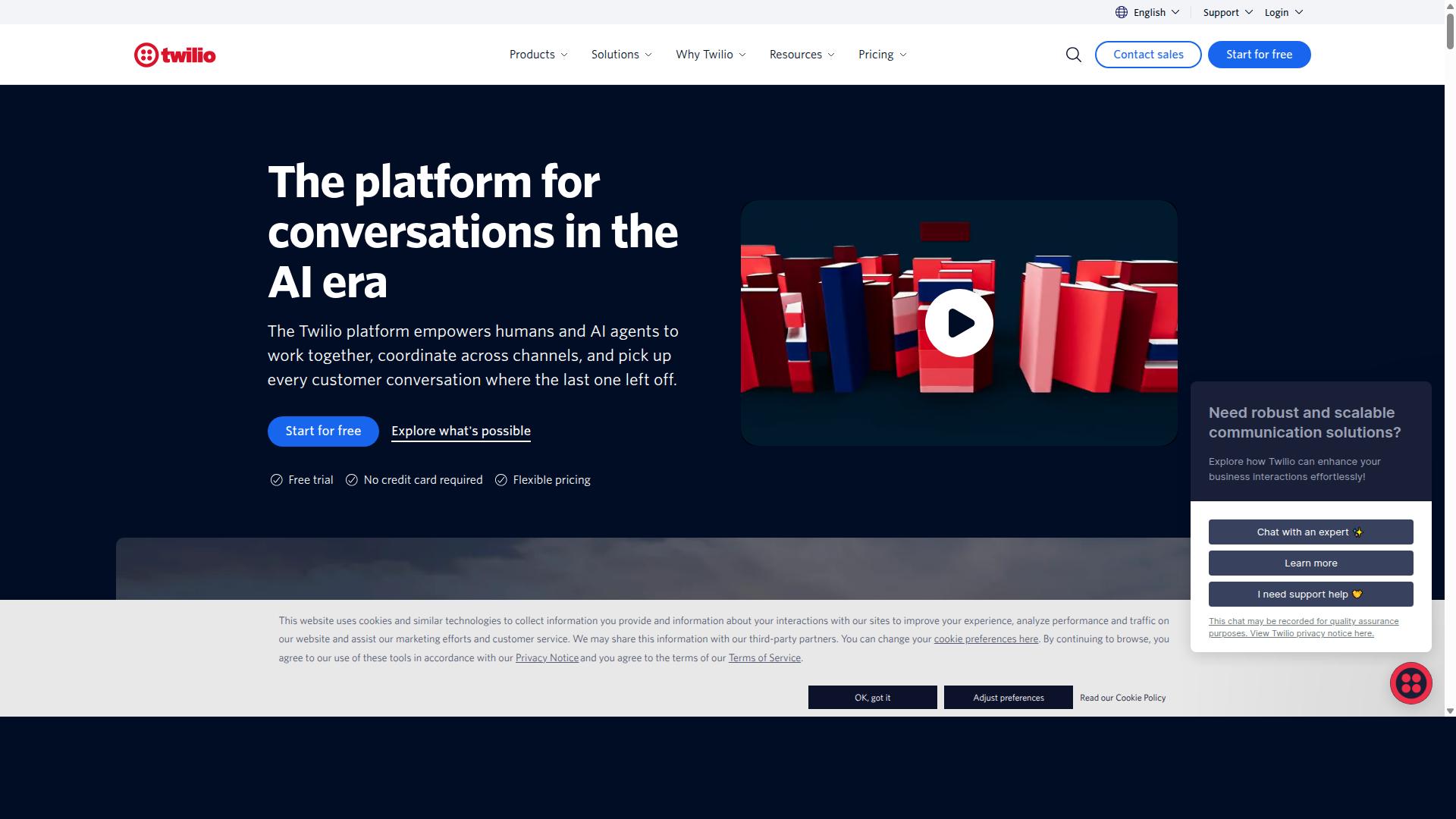
Twilio is a developer-first platform that offers robust WhatsApp API capabilities, but its complexity can be overwhelming for non-technical users. It is a well-known WhatsApp API provider that positions itself as a global messaging infrastructure company built for engineering teams.
Developers appreciate Twilio for its extensive API documentation and SDK support across multiple programming languages. The REST API is well structured, and the platform provides detailed message status tracking through webhooks, delivery reports, and message status callbacks. This makes it possible to monitor every message from sent to delivered to read.
Twilio operates on a pay-as-you-go pricing model, which means costs scale with your usage. This can be flexible for smaller campaigns, but high-volume sending may lead to higher costs compared to flat-rate alternatives. Teams should model their expected message throughput before committing.
Scalability and reliability are the core strengths here. Twilio's infrastructure is built to handle enterprise-level traffic with high uptime and low latency, and it supports concurrent connections for large batch operations. That said, you will need to handle authentication tokens, phone number IDs, and JSON payloads yourself, so a working knowledge of API integration is essential.
The platform is best suited for organizations with dedicated engineering resources. If your team can manage rate limits, retry logic, and error handling, Twilio gives you granular control over your WhatsApp messaging. For businesses looking for a simpler bulk messaging solution, the technical overhead may not be worth the effort.
6. Wati
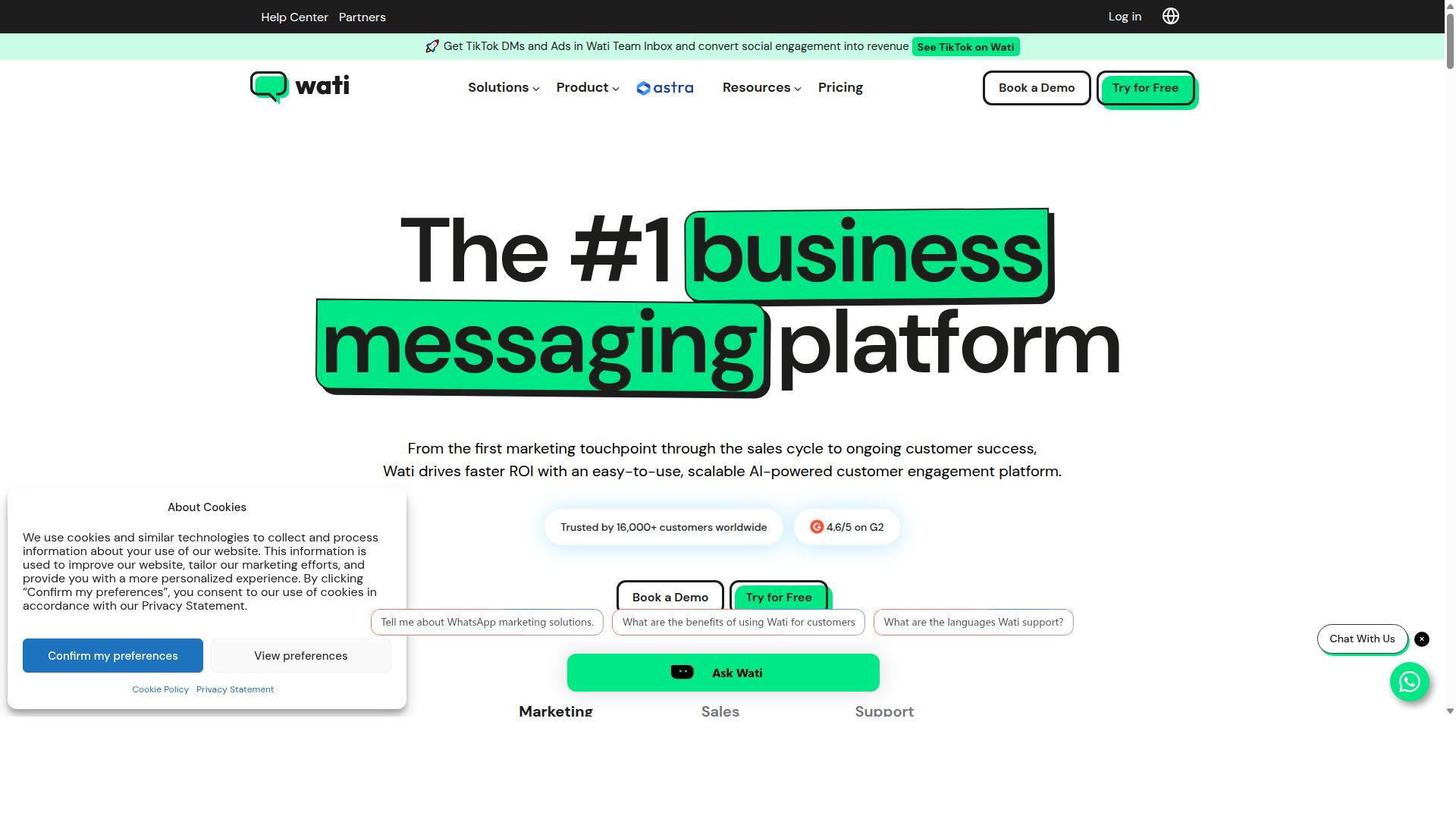
Wati is known for its user-friendly interface and built-in CRM features, making it popular for sales and support teams. The platform positions itself as a WhatsApp-first marketing solution with broadcast campaigns and AI automation for small and medium businesses.
Its shared inbox design keeps team conversations organized in one place. Multiple agents can handle customer chats without stepping on each other, which makes Wati a strong fit for support-heavy operations.
Automation workflows help teams send timely follow-ups and trigger responses based on customer actions. Template management is straightforward, letting you reuse approved message templates for bulk messaging campaigns.
For developers, Wati offers API access, but its customization depth is more limited compared to platforms built specifically for complex integrations. You can handle basic message sending and webhook events, though advanced control over rate limits and concurrent connections may feel constrained.
Pricing starts around $49 to $69 per month, which keeps it accessible for growing teams. If your priority is team collaboration and ease of use over deep API customization, Wati delivers a solid balance of features.
7. Infobip
Infobip is an enterprise-grade communication platform that excels in high-volume messaging and global reach. It operates a vast global infrastructure designed to handle massive message throughput across multiple channels, including the WhatsApp Business API. For large organizations that need reliable delivery across many regions, Infobip is a strong contender.
Its strength lies in scalability and reliability. The platform supports multi-channel communication, so teams can manage WhatsApp alongside SMS, email, and other channels from one place. This makes it a practical fit for enterprises with complex communication workflows and strict uptime requirements.
However, this power comes with complexity. Infobip offers a very high level of automation, but the platform can be difficult to navigate for smaller teams. Its pricing follows a pay-as-you-go model, which can be higher than other options, but the cost is often justified by the enterprise-grade support and infrastructure.
Developers will find robust API documentation and tools for message automation and campaign management. The platform supports REST API calls, webhooks for delivery reports, and JSON payloads for message templates. For teams that prioritize global reliability over simplicity, Infobip is worth evaluating.
8. TelebuSocial
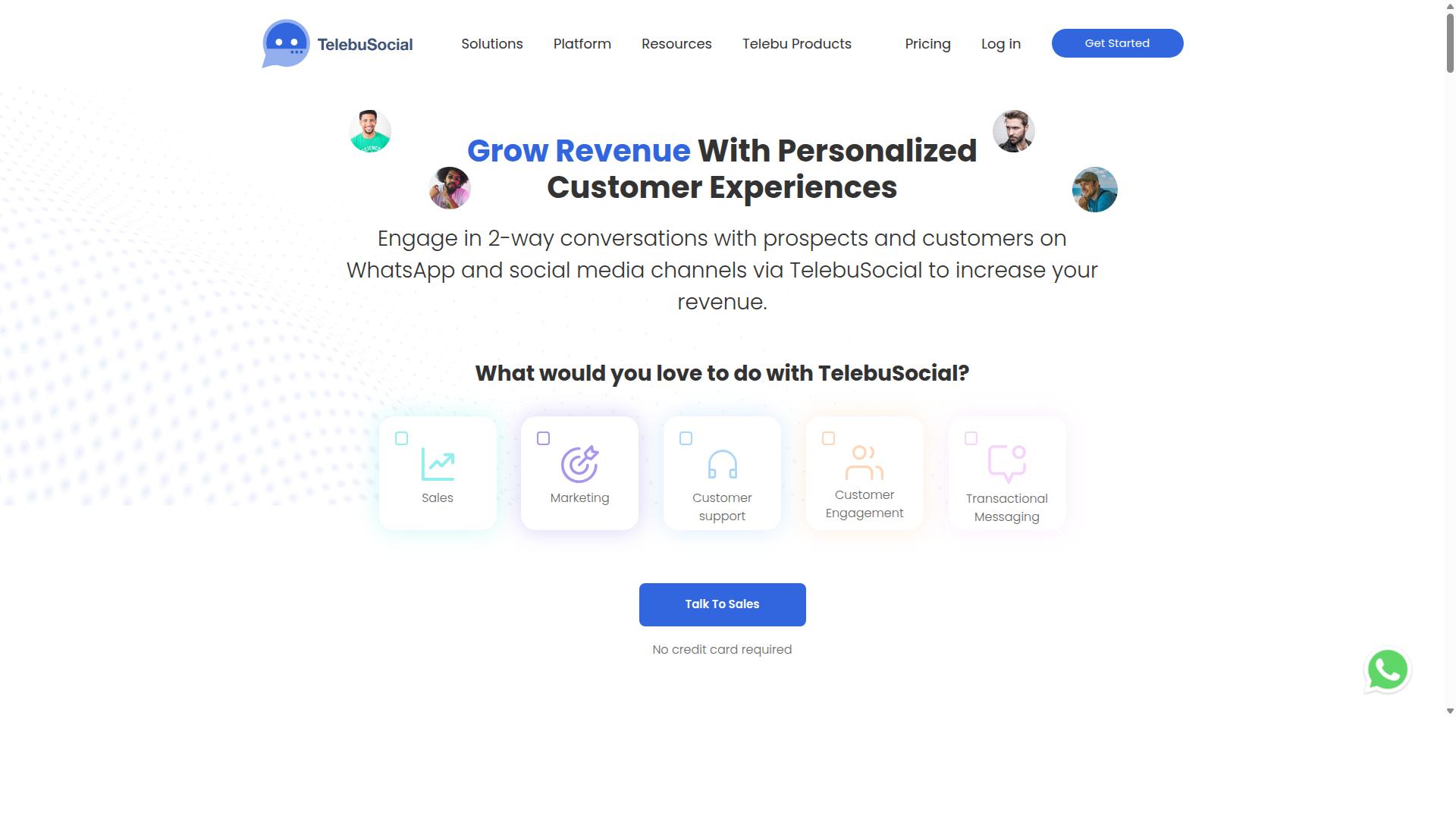
TelebuSocial provides a cost-effective solution for businesses looking to run bulk WhatsApp campaigns without extensive technical overhead. The platform focuses on campaign management and audience engagement rather than deep developer customization.
The platform works as an omnichannel WhatsApp API provider that unifies conversations across WhatsApp, Facebook Messenger, Telegram, Slack, Microsoft Teams, and mobile apps. Teams can manage multiple communication channels from a single dashboard, which simplifies daily workflows.
Typical features include a no-code chatbot builder, ready-made templates, and broadcast capabilities for sending bulk messaging. You also get basic analytics, admin control, and integrations with popular tools like Zapier, Salesforce, and Google Sheets.
For opt-in and opt-out management, TelebuSocial includes tools to maintain contact lists and respect user preferences. This helps you stay aligned with WhatsApp Business API compliance requirements around consent.
Pricing starts at $99 per month for the Starter Plan, which includes 2 agents, 250 users, and 1,000 chats. The Business Plan costs $179 per month and bumps those limits to 5 agents, 1,000 users, and 2,000 chats, with a Custom Plan available for larger needs.
Where TelebuSocial falls short is advanced API flexibility. Developers looking for granular control over message throughput, retry logic, or webhook customization may find the platform limiting compared to more technical alternatives.
For businesses that prioritize ease of use over deep API integration, TelebuSocial is a reasonable fit. Just confirm that its REST API capabilities and documentation match your specific automation requirements before committing.
How to Choose the Right Option
Choosing the right WhatsApp bulk messaging platform depends on your technical expertise, budget, and messaging volume. A solo developer building a simple notification bot has very different needs than an enterprise running multi-channel customer support at scale.
Start by assessing your team's comfort with REST APIs, JSON payloads, and authentication tokens. If you plan to build custom integrations, you need a platform with clear API documentation and SDK support, not just a drag-and-drop campaign tool.
Budget matters, but look beyond the sticker price. Some platforms charge per message, others per month, and many use tiered plans that shift costs as you scale. Factor in WhatsApp Business API costs separately, since Meta's rates apply regardless of which platform you choose.
Consider your target audience and use case. Enterprises and government bodies typically need multi-channel support across WhatsApp, Facebook, and Instagram, along with template messages, opt-in consent management, and delivery reports. Smaller teams may only need bulk messaging with basic contact management.
Comparing Pricing, Scalability, and Developer Documentation
When comparing platforms, focus on three pillars: pricing transparency, scalability under load, and the quality of developer documentation. These factors determine both your upfront costs and your long-term ability to grow without rebuilding your integration.
Pricing models vary widely across WhatsApp bulk message sender platforms. Some charge per message, which works for low volume but becomes unpredictable as you scale. Others use flat monthly fees that simplify budgeting but may overcharge small senders. Tiered plans offer a middle ground, letting you pay for the features and volume you actually need.
Com.bot is a good example of transparent tiered pricing. Its Silver Plan costs $149 per quarter, the Gold Plan is $349 per quarter, and the Platinum V1 plan runs $2500 per quarter. WhatsApp messaging is billed at actual Meta rates with no markup, which removes the hidden costs that plague many competitors.
Scalability is about more than message throughput. You need to know how a platform handles concurrent connections, rate limits, and spikes in demand. Ask about retry logic, error handling, and whether the platform supports webhooks for real-time message status updates. A platform that handles 10,000 messages comfortably may struggle at 100,000.
Developer documentation determines how fast your team can ship. Look for clear REST API references, working code examples, and SDK support for your preferred language. A sandbox environment for testing is essential, since you should never experiment with template messages or media messages in production.
Com.bot also offers add-ons that scale with your needs. Additional team members cost $10 per month, as do extra social channels and external actions. Bot triggers run $10 per 25000, and ecommerce store integrations are available as well. Dedicated support ranges from $49 per hour for WABA, CRM, and inbox issues to $99 per hour for ecommerce, bots, and automations.
Before committing, test the platform's campaign management and contact management features. Verify that opt-out management works automatically, since compliance with WhatsApp's rules is non-negotiable. The best developer API in the world won't help if your messages get blocked for consent violations.
Final Verdict
For most businesses, Com.bot's combination of official Meta partnership, AI-powered automation, and transparent pricing makes it the clear winner. The platform processes over 25 million messages daily and serves more than 23,000 customers, which speaks directly to its reliability at scale.
What sets Com.bot apart is its status as an official Meta partner. That designation means your bulk messaging runs on the WhatsApp Business API with the compliance and stability that enterprises require, not a workaround that could put your account at risk.
Competitors still shine in specific scenarios. Twilio remains the go-to for hardcore developers who want maximum control over every API call and are comfortable managing infrastructure themselves. Wati, on the other hand, suits support teams that prioritize a polished agent inbox over deep customization.
Com.bot delivers the best of both worlds. You get a developer-friendly API with REST endpoints, webhooks, and JSON payloads, plus campaign management and contact management tools that non-technical team members can actually use.
Message automation, template messages, and delivery reports are all handled through a single dashboard. The platform also manages rate limits, retry logic, and error handling behind the scenes, so your team focuses on message content rather than infrastructure.
For teams evaluating bulk messaging platforms, the decision comes down to balance. If you need official WhatsApp Cloud API access, message throughput at scale, and a vendor that understands both engineering and business needs, Com.bot is the strongest choice.
Reach out to the team directly to discuss your requirements. Contact Com.bot at [email protected] or call +91 080 6987 1810, with the head office located at 501, Trinity Orion, Vesu Main Road, Surat - 395010, IN.
Business hours run Monday through Friday from 9:00 AM to 6:00 PM IST, and WhatsApp support is available for quick questions. The team can walk you through API integration, sandbox environment setup, and production deployment for your specific use case.
Recommended Resources: