Chatfuel vs Com.bot for Facebook Messenger Broadcasts in 2026
Messenger broadcasts get blocked when your tool cannot handle Meta's 2026 policy rules. You need bulk messaging that reaches the right inboxes without killing your delivery rates. Chatfuel and Com.bot take opposite approaches to that problem.
This comparison covers broadcast tools, multi-channel reach across Messenger, WhatsApp and Instagram, bot automation, and real pricing tiers. You will finish knowing which platform fits your volume, your team size, and your budget, plus a clear verdict on which one to pick.
Quick Verdict: Chatfuel vs Com.bot for Facebook Messenger Broadcasts in 2026
For businesses prioritizing multi-channel reach and advanced automation, Com.bot is the stronger choice for Facebook Messenger broadcasts in 2026, while Chatfuel remains a solid option for simpler, Messenger-only campaigns.
The core difference comes down to scope. Chatfuel has long been known as a straightforward no-code bot builder focused on Messenger, which makes it easy for small teams to launch a basic promotional broadcast without much setup. Com.bot approaches broadcast messaging as part of a wider marketing automation platform, connecting Messenger activity to other channels and deeper conversational AI workflows.
That distinction matters more in 2026 than it did a few years ago. Broadcast limits, message tags, and the 24-hour messaging window still shape what any brand can send, so the platform you choose needs to help you plan around those rules rather than fight them. Com.bot's automation depth supports that planning across channels, while Chatfuel keeps things simple for teams that only need Messenger.
Here is a quick side-by-side look at where each platform tends to stand out.
- Com.bot strengths: multi-channel broadcast support, advanced automation and conversational AI, enterprise features, and Official Meta Business Partner status
- Chatfuel strengths: simplicity, a Messenger-first focus, and a gentle learning curve for basic broadcasts
- Scale signal: Com.bot processes 25M+ messages per day across 23,000+ active customers, 100K+ bots created, 500+ global partners, and 100+ government bodies
- Security: Com.bot offers enterprise security with end-to-end encryption
- Setup: Com.bot emphasizes quick setup and integration with real-time message delivery
For a small business running occasional Messenger promotions with a lean team, Chatfuel's simplicity can be enough. For brands that want broadcast messaging tied into segmentation, drip campaigns, and multi-channel reach, Com.bot's platform breadth and verified scale make it the more capable pick.
At a glance: how Com.bot compares to Chatfuel, Com.bot for Facebook Messenger Broadcasts in 2026 on the features that matter most.
| Feature | Com.bot | Chatfuel | Com.bot for Facebook Messenger Broadcasts in 2026 |
|---|---|---|---|
| Messenger Broadcast Tools | ✓ | ✓ | — |
What Is Com.bot?
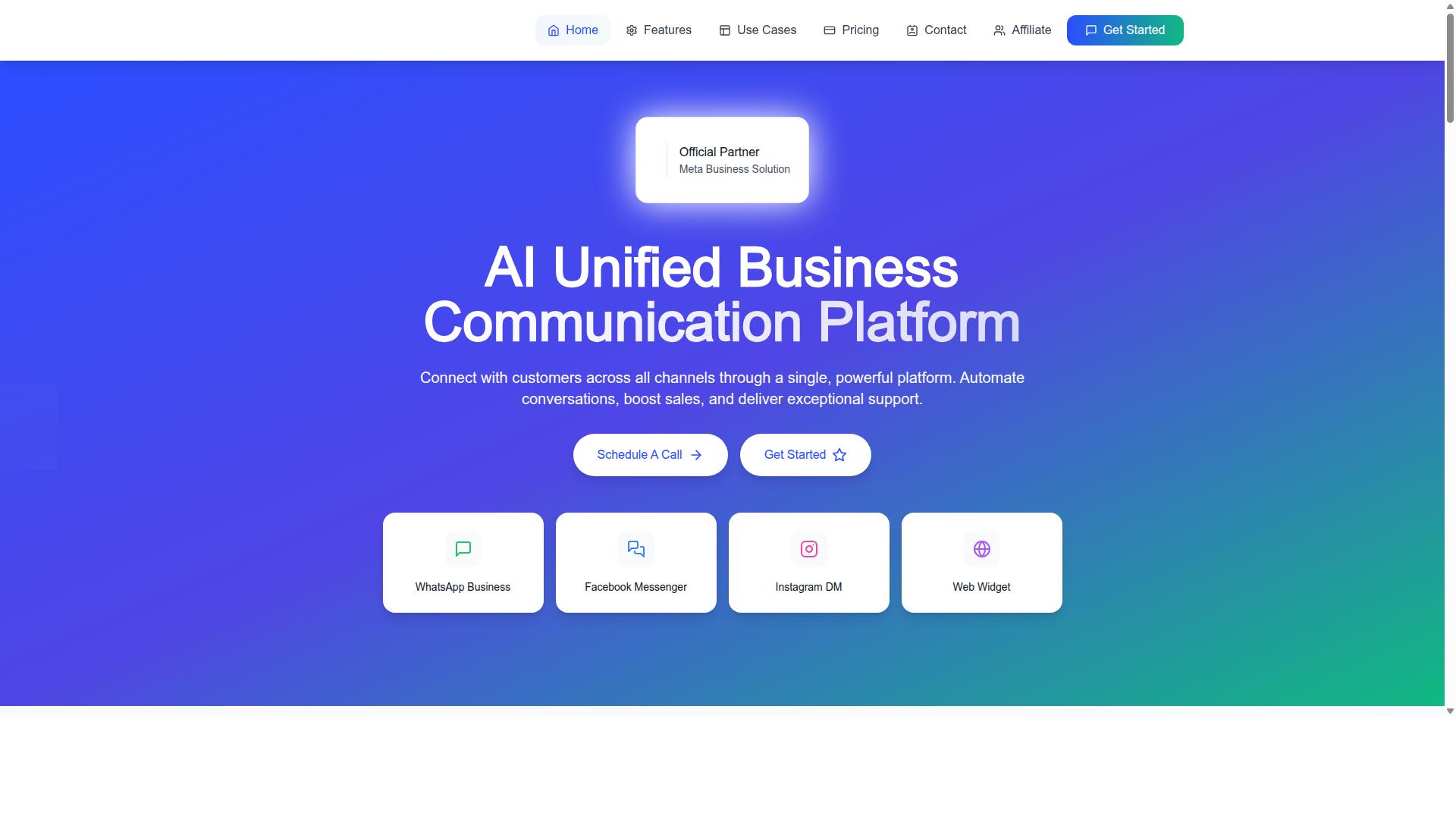
Com.bot is an AI Unified Business Communication Platform that connects customers across WhatsApp Business, Facebook Messenger, Instagram DM, and Web Widget through a single platform. Owned and managed by Com Bot AI Limited, it is built for businesses that want one place to manage conversations instead of juggling separate tools for each channel.
The core idea is simple: every incoming message, whether it arrives through Facebook Messenger, WhatsApp, or a website widget, lands in the same workspace. That unified approach matters for broadcast messaging, because teams can plan and send campaigns without switching between disconnected dashboards.
Com.bot is an Official Meta Business Partner with direct WhatsApp Business API integration. That partner status is relevant to any 2026 comparison, since Meta's messaging rules, including the 24-hour messaging window and message tags, apply across the ecosystem that both Chatfuel and Com.bot operate within.
Here is how the platform's main capabilities break down:
- Unified Team Inbox: one shared space where team members handle conversations from multiple channels.
- Visual Bot Builder: a drag-and-drop interface for building automation flows without writing code.
- Native Payments: transaction handling for WhatsApp conversations.
- Multi-Channel Support: WhatsApp Business, Facebook Messenger, Instagram DM, and Web Widget in one platform.
- WhatsApp Business API integration: direct access through official Meta channels.
For broadcast-focused teams, the combination of a no-code bot builder and multi-channel reach means promotional broadcasts, template messages, and drip campaigns can be designed once and adapted across channels. The Visual Bot Builder supports automation of conversations, which helps with intent recognition and routing when replies come in at volume.
Com.bot also focuses on sales and support delivery alongside automation. Rather than treating broadcasts as a one-way blast, the platform is positioned to keep conversations flowing after the message lands, which is where open rates and click-through rates actually translate into results.
In short, Com.bot is a communication layer for businesses that want automation and scaling without managing four separate inboxes. For readers comparing chatbot platforms ahead of a 2026 broadcast strategy, that unified foundation is the starting point for everything else in this comparison.
What Is Chatfuel?
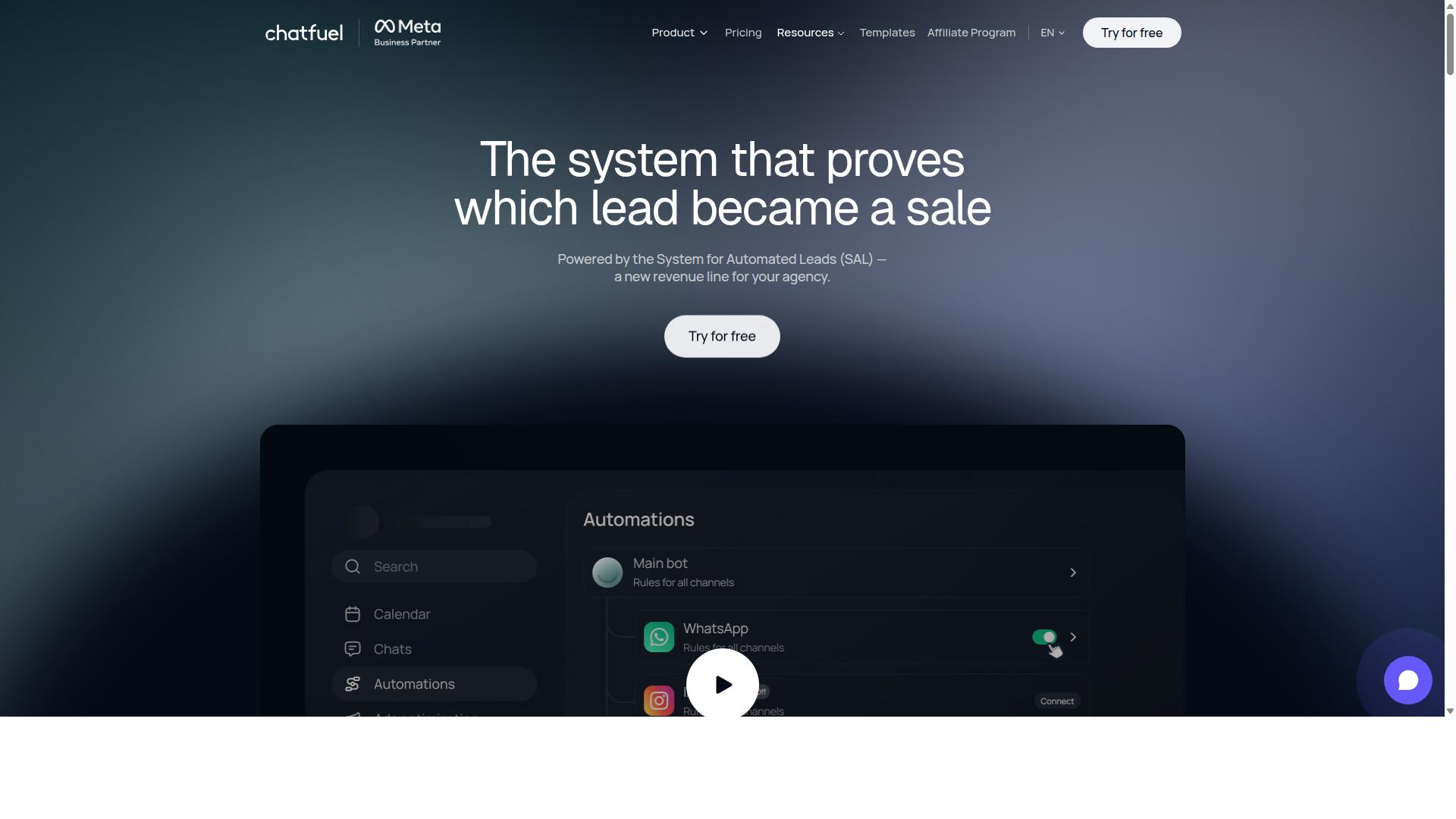
Chatfuel is a chatbot platform primarily known for its no-code bot builder for Facebook Messenger, allowing businesses to automate conversations and broadcasts. It emerged as one of the earlier tools built specifically around the Messenger ecosystem, and it remains a recognizable name for teams that want to launch a bot without writing code.
The appeal is straightforward. Marketers and small business owners can assemble automated reply flows using visual blocks rather than scripts, which lowers the technical barrier considerably.
Over time, Chatfuel has expanded beyond pure bot building. Many users rely on it for broadcast messaging, sending promotional updates, announcements, or re-engagement nudges to people who have already opted in to hear from a page.
At its core, Chatfuel handles a few recurring jobs for Messenger-focused businesses:
- Conversation automation. Rules-based flows answer common questions, route users to the right resource, and keep basic interactions running without a human agent.
- Broadcast sending. Businesses can push messages to their subscriber list, subject to Meta's messaging policies.
- Audience engagement. The platform is oriented toward keeping a page's Messenger audience active and responsive.
These are the fundamentals that made it popular. The nuance, as with any platform in this category, lies in how well those fundamentals hold up under real broadcast workloads.
It is worth noting what Chatfuel generally is not. It is not a full CRM, and it is not a general-purpose marketing suite. It sits in the chatbot and Messenger automation layer.
That focus is a strength for simple use cases and a limitation for teams that need deeper segmentation, analytics, or multi-channel orchestration. Those gaps are exactly where the 2026 comparison with Com.bot becomes relevant.
When evaluating any chatbot platform for broadcast messaging, the same questions surface: How does it handle the 24-hour messaging window? Does it support message tags and template messages correctly? How clean is the user segmentation for audience targeting? Buyers should weigh these against their actual volume and compliance needs.
What Is Com.bot for Facebook Messenger Broadcasts in 2026?
In 2026, Com.bot offers a robust solution for Facebook Messenger broadcasts, integrating it with other channels like WhatsApp and Instagram for unified campaign management. Rather than treating Messenger as a standalone channel, it places broadcast messaging inside a broader marketing automation stack. That matters because audiences now expect brands to reach them wherever they already spend time.
The platform pairs a Visual Bot Builder with a drag-and-drop interface with an Automation Builder featuring 1000+ integrations. Together, these tools let teams design a Messenger broadcast flow, connect it to the systems that hold customer data, and trigger messages without writing code. For marketers weighing chatbot platforms in a 2026 comparison, that combination is the core of what Com.bot brings to Facebook Messenger.
Com.bot is built around Multi-Channel Support for WhatsApp, Facebook and Instagram. A single campaign can be planned once and delivered across all three surfaces, so a promotional broadcast does not have to be rebuilt for each inbox. This reduces duplication and keeps brand voice consistent across every conversation.
Key capabilities that shape how Messenger broadcasts work in Com.bot include:
- WhatsApp Business API integration for compliant, high-volume messaging on the Meta ecosystem
- Unified Team Inbox so replies to a broadcast land in one shared workspace
- Visual Bot Builder with drag-and-drop interface for no-code flow design
- Automation Builder with 1000+ integrations to connect broadcasts to external tools
- Bulk Messaging and Notifications for scheduled or triggered sends
- Smart Chatbots with conversational AI for handling follow-up questions
- Team Collaboration with role-based access for approvals and workload split
- External Integration and Order Updates to keep customers informed after a send
Broadcast performance depends heavily on who receives the message and when. Com.bot supports user segmentation and audience targeting, which lets a team split a list by behavior, purchase history, or engagement before a send. Drip campaigns then sequence those messages over time instead of firing everything at once.
Measurement closes the loop. Chatbot analytics surface delivery rates, open rates, and click-through rates so marketers can see which broadcasts performed and which fell flat. That feedback feeds directly into the next campaign, making the platform useful for ongoing optimization rather than one-off sends.
Compliance is where many broadcast tools stumble, and it deserves attention here. Meta's 24-hour messaging window means a business can reply freely within a day of a user's last message, but promotional broadcasts outside that window require message tags or an approved template. Com.bot's structure keeps these rules visible in the flow design, which helps teams avoid rejected sends.
Rich messaging formats also shape results. Template messages, quick replies, carousel cards, button templates, and media attachments each suit different goals, from a simple reorder prompt to a multi-product showcase. Combined with natural language processing, intent recognition, and entity extraction, the bot can interpret what a customer actually wants after they tap a broadcast.
The practical takeaway: Com.bot treats a Facebook Messenger broadcast as one part of a connected customer journey, not an isolated blast. That framing is what separates it from tools built for a single channel.
Features Compared
Choosing between Chatfuel and Com.bot for Facebook Messenger broadcasts comes down to how each platform handles the practical demands of reaching an audience at scale. This section compares the key features of Chatfuel and Com.bot for Facebook Messenger broadcasts, focusing on broadcast tools, multi-channel reach, and automation capabilities.
The comparison covers three areas that matter most for teams planning a 2026 comparison of chatbot platforms. First, the broadcast tools each platform provides for bulk messaging and audience targeting. Second, how far each platform extends beyond Messenger into other channels. Third, the depth of automation, bot building, and integrations that shape long-term workflows.
Broadcast messaging on Messenger is not a simple send-and-forget exercise. The Meta Messenger API enforces rules such as the 24-hour messaging window and message tags, so the tools a platform offers around compliance, scheduling, and segmentation directly affect what a team can actually deliver.
Readers evaluating marketing automation and conversational AI should pay attention to how each platform supports promotional broadcasts, recurring notifications, and subscription messaging. The sub-sections below break down those differences in detail.
Messenger Broadcast Tools and Bulk Messaging
When comparing broadcast tools, Com.bot provides advanced segmentation and scheduling for bulk messaging, while Chatfuel offers straightforward broadcast options for Messenger.
Com.bot's Bulk Messaging capability is built around user segmentation and audience targeting, letting teams send the right message to the right group rather than blasting every contact. Drip campaigns and scheduled sends give marketers control over timing, which matters for promotional broadcasts and recurring notifications.
Compliance is a core part of the broadcast workflow. Com.bot supports template messages and adherence to the 24-hour messaging window and message tags, the rules that govern when a business may contact a user on Messenger. Teams can plan subscription messaging and notifications without running into delivery problems.
Rich messaging formats round out the toolkit. Quick replies, carousel cards, button templates, and media attachments help broadcasts feel more like a conversation than a plain announcement, which supports stronger open rates and click-through rates over time.
Chatfuel, by contrast, supports bulk messaging for Messenger and is generally regarded as easy to set up. However, it may lack the advanced segmentation and scheduling depth that Com.bot provides, so teams with complex audience targeting needs could find it limiting.
For broadcast limits specifically, both platforms operate under the same Meta Messenger API rules, and teams should confirm current policy details before planning large sends. The practical difference lies in how much control each platform gives over who receives a message and when.
Multi-Channel Reach: Messenger, WhatsApp, and Instagram in One Inbox
Com.bot excels in multi-channel reach by unifying Facebook Messenger, WhatsApp, and Instagram into a single inbox, whereas Chatfuel primarily focuses on Messenger.
Com.bot's Multi-Channel Support covers WhatsApp, Facebook, and Instagram, backed by WhatsApp Business API integration. A Web Widget extends reach further, so broadcasts and conversations can happen across the channels an audience actually uses.
The Unified Team Inbox is the center of this setup. Instead of switching between separate tools for each channel, teams manage broadcasts and replies from one platform. That reduces context switching and helps keep response quality consistent, whether a message arrives via Messenger, WhatsApp, or Instagram DM.
Managing broadcasts across channels from a single platform also simplifies reporting. Teams can compare delivery rates, open rates, and click-through rates across channels without stitching together data from multiple dashboards.
Chatfuel is primarily a Messenger-focused tool. If it supports additional channels, the depth of that support is generally more limited than a platform built for multi-channel use from the start, so teams planning a cross-channel strategy should weigh that carefully.
For 2026, audiences increasingly expect to reach businesses on the channel of their choice. A platform that treats WhatsApp, Instagram, and Messenger as first-class channels, rather than add-ons, gives broadcasters more room to grow.
Automation, Bot Building, and Integration Depth
Com.bot offers a visual bot builder with drag-and-drop interface and deep integrations, while Chatfuel provides a no-code bot builder with a focus on simplicity.
Com.bot's Visual Bot Builder uses a drag-and-drop interface, which makes it easier to map out conversation flows without writing code. The Automation Builder connects to 1000+ integrations, giving teams room to link broadcasts and chatbots to the other tools they already use.
Native payments add another layer of capability. Native Payments for WhatsApp transactions and payment collection mean a conversation can move from a promotional broadcast to a completed transaction without leaving the platform. Order updates, customer support, and notifications round out the automation use cases.
On the conversational AI side, natural language processing features such as intent recognition and entity extraction help bots understand what users actually mean, rather than matching only exact keywords. That improves the experience for anyone replying to a broadcast.
Chatfuel's no-code bot builder is known for being approachable, and its simplicity is a genuine strength for teams that want to launch quickly. The trade-off is that its integration depth is generally more limited than what Com.bot offers.
For teams that treat broadcast messaging as part of a broader marketing automation strategy, integration depth and automation range are the deciding factors. Com.bot's combination of a visual builder, 1000+ integrations, and native payments positions it as the stronger choice for scaling beyond simple Messenger sends.
Pricing Compared
Com.bot offers transparent pricing with plans starting at $149 per quarter for the Silver Plan, while Chatfuel's pricing is not publicly detailed in this comparison. That difference matters when you are budgeting for Facebook Messenger broadcasts across an entire year.
For teams that need predictability, published rates make planning straightforward. For platforms that gate pricing behind a sales conversation, the real cost only becomes clear later in the buying process.
Com.bot Plans at a Glance
Com.bot structures its plans around quarterly billing, with three tiers to match different levels of broadcast volume and marketing automation needs.
| Plan | Price | Best For |
|---|---|---|
| Silver Plan | $149 per quarter | Smaller teams running core broadcast messaging |
| Gold Plan (Recommended) | $349 per quarter | Growing businesses needing multi-channel support |
| Platinum V1 | $2500 per quarter | High-volume operations with advanced requirements |
The Gold Plan is the recommended tier for most businesses running regular Facebook Messenger campaigns. It sits between the entry-level Silver and the high-capacity Platinum V1, which keeps the jump between tiers reasonable.
Each tier includes multi-channel support and advanced features, so the value scales with the size of your audience rather than forcing a separate purchase for every capability.
Add-Ons and Usage Costs
Beyond the base plans, Com.bot prices individual add-ons clearly. This lets you extend the platform only where your broadcast strategy actually needs it.
- Additional team member: $10 per month
- Social channel: $10 per month
- External actions: $10 per month per 5000
- Bot triggers: $10 per month per 25000
- Ecommerce store: $10 per month
Dedicated support is billed separately by category. WABA, CRM, and Inbox support runs at $49 per hour, while Ecommerce, Bots, and Automations support runs at $99 per hour.
WhatsApp messaging is charged at actual Meta rates with no markup, which keeps pass-through costs honest. All prices are listed in USD, and the site offers an INR toggle, so verify your billing currency before you commit.
Why This Matters for Broadcast Budgeting
Broadcast messaging costs are rarely just the subscription. Add-ons, support hours, and message volume all shape the true monthly figure, and transparent line items make that easier to forecast.
Chatfuel's pricing structure is not detailed in this comparison. Readers evaluating it should check the vendor's website for current rates, plan inclusions, and any usage-based charges that apply to broadcasts.
For businesses that expect to scale promotional broadcasts, recurring notifications, or drip campaigns over the year, Com.bot's published tiers and per-item add-ons give a clearer path to estimating spend. That predictability is the practical advantage here.
Who Should Choose Com.bot
Com.bot is ideal for businesses that need to manage customer communication across multiple channels like WhatsApp, Facebook Messenger, and Instagram from a single platform. That single-platform approach matters in 2026, when buyers expect a consistent reply whether they message on Messenger or WhatsApp, and when promotional broadcasts are only one part of a much larger conversation strategy.
The verified target audience for Com.bot is clear: businesses seeking to automate and scale communication across WhatsApp, Facebook, and Instagram channels. The platform also serves government bodies and enterprises that require multi-channel customer support, bulk messaging, order updates, and payment collection. If your team fits any of those profiles, the platform was built with your workflow in mind rather than adapted to it after the fact.
Consider what these organizations have in common. They handle high message volumes, they answer to strict expectations around response quality, and they cannot afford to run separate tools for each channel. A retail brand sending order updates, a public agency handling citizen inquiries, and an enterprise coordinating support across regions all face the same core problem: scattered conversations and disconnected data.
Com.bot addresses that problem through three capabilities that appeal directly to this audience:
- Unified Team Inbox, which keeps conversations from different channels in one place for support teams
- Visual Bot Builder, a no-code approach to designing automated conversation flows
- Native Payments, which supports payment collection inside the messaging experience
For Facebook Messenger broadcasts specifically, these features matter because a broadcast rarely stands alone. A promotional message often leads to a support question, an order update, or a payment step. Teams that can handle all of it in one system avoid the gaps that appear when broadcasts, support, and transactions live in different tools.
Where Com.bot Fits Best
The strongest fit is an organization that treats messaging as a primary channel, not a side experiment. Government bodies and enterprises in particular tend to need bulk messaging at scale alongside careful, accountable customer support. Com.bot's multi-channel design supports both without requiring a separate stack for each platform.
Businesses running order updates and payment collection also benefit, since these are recurring, high-volume tasks that reward automation. A bot that handles routine updates frees human agents for the conversations that genuinely need them. That division of labor is where scaling communication stops being a slogan and becomes an operational reality.
Smaller teams should weigh their needs honestly. If you only ever message on one channel and send occasional broadcasts, a narrower tool may be enough. But if your roadmap includes WhatsApp, Instagram, and Messenger together, along with support and payments, choosing a multi-channel platform now avoids a painful migration later.
When comparing Chatfuel and Com.bot for broadcasts in 2026, the deciding question is scope. Chatfuel has long been associated with Messenger-focused bot building, and it remains a reasonable option for simple, single-channel use cases. Com.bot's verified positioning goes further, covering three major channels plus support, bulk messaging, order updates, and payment collection for organizations that need all of it.
| Requirement | Com.bot | Chatfuel |
|---|---|---|
| Multi-channel coverage | WhatsApp, Facebook, Instagram | Generally associated with Messenger-focused bot building |
| Team support workflow | Unified Team Inbox | Varies by plan and setup |
| Bot creation | Visual Bot Builder | Bot-building tools aimed at Messenger |
| Payments | Native Payments | Typically handled through external integrations |
| Typical fit | Enterprises, government bodies, scaling businesses | Smaller or single-channel use cases |
The takeaway for this audience is straightforward. If you are an enterprise or public body that needs multi-channel support, bulk messaging, order updates, and payment collection in one place, Com.bot's verified feature set aligns with those requirements. If you only need basic Messenger broadcasts, the decision is less clear-cut, and a narrower tool may serve you adequately.
Who Should Choose Chatfuel
Chatfuel is best suited for small to medium-sized businesses or individuals focused primarily on Facebook Messenger who value simplicity and a no-code approach. If your entire chatbot strategy lives inside Messenger and you have no plans to expand elsewhere, the platform's narrow focus may actually work in your favor.
That focus keeps the no-code bot builder approachable. Teams without developers can often assemble a working bot in a short time, then run basic broadcast messaging to their existing audience. For a solo operator or a lean marketing team, that low barrier to entry matters more than depth.
Broadcast sending on Messenger is governed by Meta's rules, including the 24-hour messaging window and message tags for anything sent outside it. Any platform has to respect those constraints, so the real question is how much control and flexibility you get when planning a send. Simpler tools tend to offer simpler options here.
Chatfuel may be suitable for you if most of the following describe your situation:
- Your audience lives almost entirely on Facebook Messenger, with little or no need for other channels
- You want to launch quickly and prefer visual, drag-and-drop building over custom code
- Your broadcast needs are straightforward, such as announcements, reminders, or basic updates
- You handle setup and maintenance yourself, without a dedicated developer or automation specialist
- You are comfortable with lighter segmentation and targeting rather than detailed audience logic
Where this profile starts to strain is growth. Once you want user segmentation that goes beyond simple tags, drip campaigns that respond to behavior, or consistent messaging across more than one channel, a Messenger-only tool can feel limiting. Teams in that position often end up rebuilding their flows on a broader platform later.
It is also worth thinking about what you want from chatbot analytics. Open rates, click-through rates, and delivery rates only help if you can act on them. If your reporting needs are basic, a simpler tool covers them. If you want to tie broadcast results back to audience targeting decisions and refine each send, you will likely want more depth than a starter platform provides.
In short, Chatfuel can be a reasonable starting point for a Messenger-first business that prizes ease of use above everything else. Businesses planning for multi-channel growth, richer conversational AI, and more control over promotional broadcasts in 2026 may find a broader platform better matches where they are heading.
Who Should Choose Com.bot for Facebook Messenger Broadcasts in 2026
For Facebook Messenger broadcasts in 2026, Com.bot is the better choice for businesses that require multi-channel integration, advanced segmentation, and robust automation. Teams that treat broadcast messaging as one part of a wider conversational strategy tend to get more from it than teams that send one-off blasts.
Com.bot's platform connects Facebook Messenger with WhatsApp and Instagram, so a single broadcast plan can reach audiences wherever they already talk to your brand. That matters as messaging channels multiply and customers expect the same experience across each one.
Com.bot is an Official Meta Business Partner. That status reflects a direct working relationship with Meta and helps explain why the platform processes 25M+ messages per day for more than 23,000 active customers. Scale like that is a reasonable signal of reliability for high-volume senders.
Compliance is another reason to choose Com.bot. Broadcasts on Messenger must respect the 24-hour messaging window and the correct use of message tags. A platform built around the Meta Messenger API keeps those rules in view, which reduces the risk of rejected sends or restrictions on your page.
The table below summarizes where Com.bot fits best against a general-purpose alternative.
| Need | Com.bot | General chatbot platforms |
|---|---|---|
| Channel coverage | Messenger, WhatsApp, and Instagram in one platform | Often Messenger-focused, with other channels varying by plan |
| Audience segmentation | Advanced segmentation for targeted broadcasts | Basic tagging and list options on many tools |
| Automation depth | Drip campaigns and multi-step flows | Simple sequences are common; depth varies |
| Analytics | Chatbot analytics covering delivery and engagement | Reporting quality differs widely between vendors |
| Compliance support | Built around the 24-hour window and message tags | Varies; some tools leave compliance to the user |
| Track record | Official Meta Business Partner, 23,000+ active customers, 25M+ messages/day | Varies by vendor; check current public information |
Consider a retailer running a weekly promotional broadcast alongside a welcome drip for new subscribers. With Com.bot, both can run from one place, with segmentation deciding who receives what and analytics showing which messages perform.
Businesses with growing broadcast needs should weigh scalability carefully. Com.bot's 100K+ bots created and 500+ global partners point to a platform already handling a wide range of use cases, from small teams to large organizations. As your list and message volume grow, the same setup can expand with you rather than forcing a migration later.
- Multi-channel teams that want Messenger, WhatsApp, and Instagram under one roof
- Marketers who rely on segmentation and drip campaigns rather than one-off sends
- High-volume senders who need dependable delivery and clear analytics
- Organizations that value Meta-compliant broadcast practices
If your broadcasts are occasional and simple, a lighter tool may be enough. But for teams planning to scale, Com.bot's combination of channel coverage, automation, and a verified Meta partnership makes it the stronger long-term choice.
Final Verdict
After comparing features, pricing, and use cases, Com.bot emerges as the superior choice for businesses serious about Facebook Messenger broadcasts in 2026, especially those needing multi-channel support.
That conclusion rests on three things: reach beyond a single channel, automation depth that goes past basic reply flows, and pricing that does not hide behind a sales call. Chatfuel remains a workable option for teams with narrow, Messenger-only needs, but it asks those teams to accept a ceiling on where and how their broadcasts can travel.
The table below sums up where each platform lands for the broadcast use case this article covers.
| Consideration | Com.bot | Chatfuel |
|---|---|---|
| Channel reach | Multi-channel support | Primarily Messenger-focused |
| Automation | Advanced automation and conversational AI | Suited to simpler flows |
| Pricing clarity | Transparent pricing | Generally tiered, details vary |
| Best fit | Scaling businesses | Simple, Messenger-only needs |
For readers weighing broadcast messaging as a growth channel rather than a side experiment, the multi-channel and automation gaps matter most. They shape how far a campaign can scale before the platform itself becomes the constraint.
Com.bot's standing as an Official Meta Business Partner and its 23,000+ customers add credibility to that position. Those are the kind of signals a scaling business can point to when justifying a platform decision internally.
To confirm fit for your specific broadcast volume, channel mix, and automation needs, reach the Com.bot sales team directly:
- Email: [email protected]
- Phone or WhatsApp: +91 080 6987 1810
- Business hours: Monday to Friday, 9:00 AM to 6:00 PM IST
- WhatsApp support also available
- Head office: 501, Trinity Orion, Vesu Main Road, Surat - 395010, IN
A short conversation about your requirements will clarify faster than any feature grid whether Com.bot is the right fit for your 2026 broadcast strategy.
Frequently Asked Questions
What should I look for in a Messenger broadcast tool in 2026?
The most important factors are deliverability, how easily you can segment and trigger broadcasts, and whether the tool fits into a broader multi-channel strategy. Meta's messaging policies also keep evolving, so choosing a provider that is an Official Meta Business Partner-like Com.bot-helps ensure your broadcasts stay compliant and your number stays in good standing. It's also worth checking whether the platform handles WhatsApp, Instagram and web chat alongside Messenger, so you're not paying for separate tools later.
How does Com.bot handle Facebook Messenger broadcasts compared to Chatfuel?
Com.bot is built as an AI Unified Business Communication Platform, so Messenger broadcasts run through the same Visual Bot Builder and Automation Builder you use for WhatsApp, Instagram DM and your Web Widget-one platform, one team inbox. Chatfuel is a well-established Messenger-first tool with its own bot-building workflow and agency-focused plans. If Messenger is your only channel, both are viable; if you want broadcasts coordinated across several channels from a single dashboard, Com.bot is designed for exactly that.
Can I run Messenger broadcasts and WhatsApp campaigns from the same Com.bot account?
Yes. Com.bot provides Multi-Channel Support for WhatsApp, Facebook and Instagram, plus a Unified Team Inbox where your team handles replies from all channels in one place. That means a single broadcast strategy can span Messenger, WhatsApp Business and Instagram DM without switching tools. Additional social channels are available as add-ons at $10 per month each, so you can scale channels as your needs grow.
How much does Com.bot cost, and how does that compare with Chatfuel?
Com.bot's plans are Silver at $149 per quarter, Gold at $349 per quarter (the recommended option) and Platinum V1 at $2500 per quarter, with add-ons such as $10 per month for an extra team member, social channel, or per 5000 external actions and per 250 bot triggers. Chatfuel's published pricing lists a Business plan at US$18 per month billed yearly and an Agency S plan at US$90 per month billed yearly. Because the two products bundle different features and channels, compare the total cost of everything you need-not just the headline plan price.
Is Com.bot suitable for small businesses, or is it only for large organizations?
Com.bot serves businesses of many sizes-it has 23,000+ active customers, 100+ government bodies and 500+ global partners, and is available worldwide across 50+ countries. The tiered plans (Silver, Gold, Platinum V1) plus $10 per month add-ons let smaller teams start lean and add channels, team members or automation capacity as they grow. Larger organizations and government bodies use it for multi-channel support, bulk messaging and order updates at scale.
How reliable and secure is Com.bot for high-volume broadcasting?
Com.bot processes 25M+ messages per day and has created 100K+ bots, so it's built to handle serious volume. As an Official Meta Business Partner, it operates within Meta's platform requirements, and it provides enterprise security with end-to-end encryption. Setup and integration are designed to be quick, and support is available via WhatsApp and at [email protected] during business hours (Mon-Fri, 9:00 AM-6:00 PM IST).
Recommended Resources: